100 Miles Down the River Raft Building: Upgrade Guide
Master 100 Miles Down the River raft building with the 30-wood start, repairs, bumpers, canopies, and engine tips to keep your raft moving toward Mile 100.
Jump to

How to Build Your Raft
Start 100 Miles Down the River raft building by collecting 30 wood from trees and adding it to the starter raft. Keep wood for repairs and campfires, then attach bumpers for rock impacts and a canopy to block snakes. Add an engine when you can keep it supplied with oil.
Punch trees at the starting area until you have the required wood, then deposit it into the raft. Completing the starter build triggers a departure countdown, so get aboard promptly. Your starting equipment includes a paddle and fishing rod.
Raft Parts and Functions — November 24, 2026
| Part or resource | What it does |
|---|---|
| 30 wood | Builds the starter raft |
| Wood | Repairs raft damage and fuels campfires |
| Bumper | Makes rocks bounce off instead of breaking your raft |
| Canopy | Stops snakes from boarding the raft |
| Sail | Adds speed when you catch wind |
| Engine | Pushes the raft while it has oil; comes with two oil |
| Metal plank | Replaces a wooden plank |
| Torch | Adds light to the raft |
Gather supplies and inspect your build before boarding at camp. Departure can interrupt shopping and attachment work, leaving you downstream with unfinished repairs.
Official page: 100 Miles Down the River (roblox.com)
Repair Before Adding More Speed
Check the raft whenever you reach camp. Missing corners and broken sections are warnings to repair before another stretch of rapids, especially when those sections carry useful attachments.
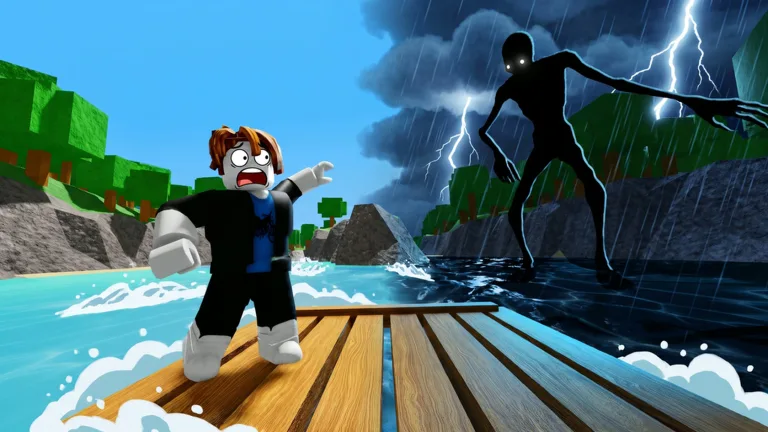 Image: Roblox / goin with the flow
Use wood to restore the raft at the repair interaction. The amount needed depends on the damage: a badly battered raft can demand 84 wood. Treat the initial 30-wood requirement as your launch cost, and keep gathering throughout the trip.
At each stop:
- Check the campfire and add wood if night is approaching.
- Repair damaged raft sections.
- Open nearby chests for supplies and equipment.
- Gather more wood before departure.
- Finish attaching parts before getting back aboard.
Pick up an axe when you find one so you can chop trees instead of continuing to punch them. Chests can also contain wood, making them useful stops even when you already have the equipment you need.
Repair kits are another available item, but inspect the raft after using one. Keep gathering wood rather than assuming a kit will restore every damaged section.
Add Protection for Rocks and Wildlife
Attach bumpers before committing to repeated speed boosts. Rocks can break raft sections and knock you into the water, so reducing collision damage directly addresses a recurring problem along the river.
 Image: Roblox / goin with the flow
Bumpers make rocks bounce off instead of breaking the raft. Continue steering around obstacles: gators, snakes, rough water, and the nighttime hunter remain separate threats.
Add a canopy to stop snakes from climbing aboard. Without one, snakes can repeatedly interrupt the trip and need to be knocked off. Install the canopy during a camp stop so you can finish the attachment before departure.
Metal planks let you replace wooden pieces later in the journey. Inspect the raft and complete those replacements while stopped; stepping aboard before finishing can cut the work short.
Keep Your Light Away From Exposed Corners
Place torches away from corners that keep taking hits. Losing a raft section can also cost you the attachment mounted there, which becomes especially dangerous when that attachment supplies your light.
Torches can go out, too. Keep watching their condition rather than treating an attached torch as permanent protection for the rest of the run.
Use Paddles, Sails, and Engines Without Losing Control
Use the paddle to steer, balancing strokes on opposite sides instead of paddling continuously from one side. Make corrections before a rock fills your path; rapids leave less room to recover.
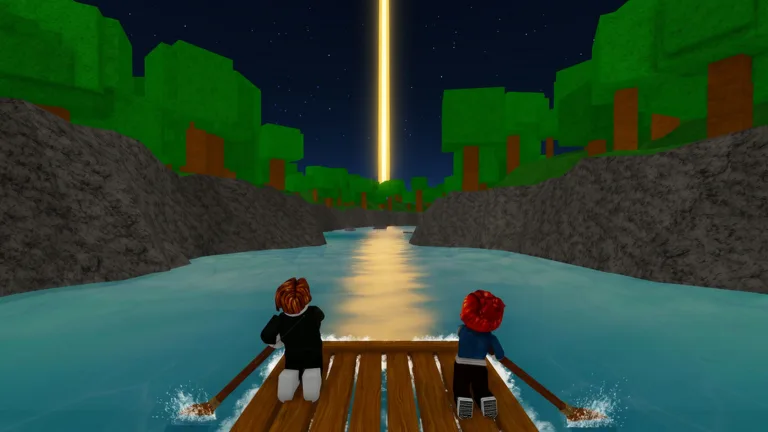 Image: Roblox / goin with the flow
Watch for white-water stretches that accelerate the raft. Stay aboard through drops and rough water, and avoid unnecessary jumps. Getting thrown off can leave you swimming near gators while the raft continues downstream.
Three early milestones give you concrete targets:
- Cast Off: Reach Mile 1.
- Quarter Way: Reach Mile 25.
- Untouched: Reach Mile 25 in one run without ever getting knocked down.
Sail and Engine
Attach a sail to gain speed during gusts of wind. Plan your steering around that extra momentum, particularly when approaching narrow gaps or rocks.
An engine supplies propulsion while it has oil and comes with two oil. Check your fuel before relying on it for the next stretch. Some camps have no shop, so buy supplies when you reach one that does.
Keep repairing even after installing an engine. More propulsion still carries a damaged raft into the same hazards.
Fisherman’s Brew and Turbo
Fisherman's brew temporarily doubles paddling speed. Use it when you have a clear route ahead and enough daylight or protection to reach your next stop.
Turbo provides a short burst of speed; a 20-second duration appears during activation. Avoid triggering it immediately before a dense obstacle section. Faster movement gives you less time to correct your heading and can turn a damaged corner into a missing section.
Keep Wood, Food, and Light Ready at Camp
Wood supports both your raft and your nighttime shelter. Save enough to repair damage and maintain the campfire rather than spending your entire supply on one task.
When the hunting warning appears, head for camp and stay within the fire's light. Add wood before the fire dies, and avoid wandering out to gather trees while the hunter is close. An intact raft cannot protect you from being grabbed outside the light.
Fish during calmer stretches or while waiting at camp. Cook your catch when a cooking interaction is available, then carry food for stops without cooking facilities.
Fish stew requires 40 wood and three fish. Account for that wood cost before cooking if the raft also needs repairs. Keep bandages ready for injuries from wildlife, collisions, or falls.
A flare gun can drive off the Storm Walker. Keep it available for an emergency between camps, and aim for the next shelter after creating that opening. A fire pot also keeps the hunter outside its light.
Do not use those tools as a reason to ignore repairs or food. Night travel still leaves you dealing with rocks, wildlife, and a raft that can break apart.
Prepare the Raft for Mile 100
Repair at the late camps even when the destination looks close. Storm Reach combines poor visibility with continued obstacles, and a raft already missing sections has little room for another collision.
Before leaving a final supply stop, repair the remaining damage, gather wood, eat, and check your light equipment. Carry bandages and keep the flare gun accessible if you have one.
Reaching Mile 100 leads into the beacon encounter. Once ashore:
- Collect embers around the area.
- Light the four keepers first.
- Carry the remaining embers to the central fire.
- Keep moving around the Storm Walker while completing deliveries.
Lighting the beacon drives the hunter and storm away. Save your remaining healing supplies for those ember runs—the river crossing ends before the danger does.
Continue exploring

100 Miles Down the River Solo: Beat Mile 100 Alone
Beat 100 Miles Down the River solo with raft repairs, food prep, safe camp stops, and beacon fight steps. Learn how to earn the Lone Paddler badge alone.
100 Miles Down the River Journal Pages: Badge Guide
Find 100 Miles Down the River journal pages at river camps, learn what their clues mean, and plan safer stops while working toward the Full Journal badge.
Join the community
Official channels for news, updates and player help: